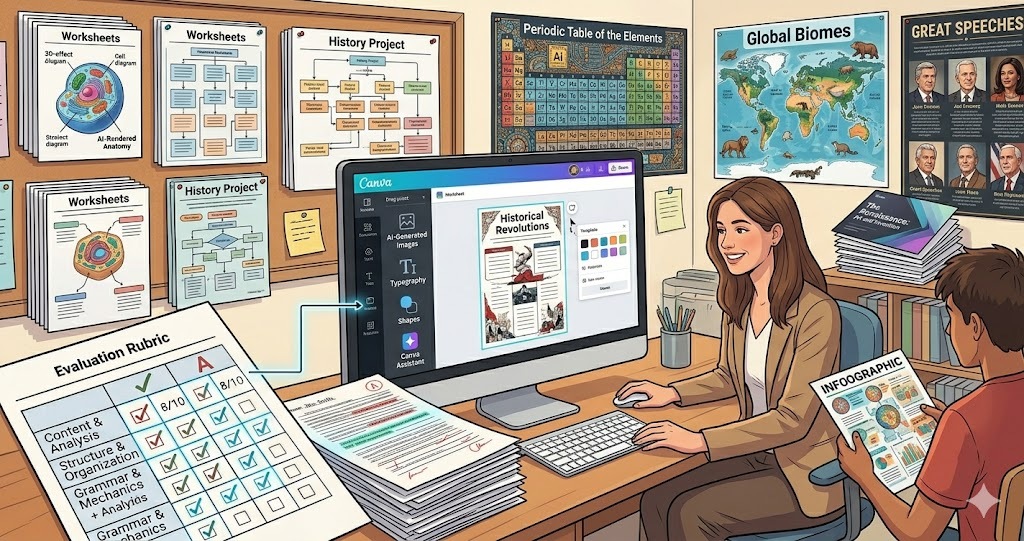
It was 9 PM on a Thursday. I was sitting in my classroom. Red pen in one hand. A teacher’s edition textbook threatening to slide off my lap. Trying — really trying — to figure out how I was going to make the French Revolution interesting to a bunch of 14-year-olds. You know what most of them had for lunch? Neither did they. I looked at my half-written lesson plan and thought, this is ridiculous. There has to be a better way.
But let me back up. I was never the type to jump on every new tech trend. Remember when everyone thought QR codes were going to revolutionize education? Yeah, me neither. So when Canva’s AI features first started making waves, I rolled my eyes. Another tool I do not have time to learn. But then a colleague — let us call her Sarah — sat me down and showed me what she was doing with it. And I have to admit, I was wrong.
What’s So Special About Canva AI?
Here’s the deal: Canva AI isn’t just for graphic designers or those Insta-perfect influencers. It’s made for teachers like you and me. You know, the ones who often have to create dazzling visuals while operating on a caffeine budget. Imagine transforming your basic slides into vibrant, engaging masterpieces with just a few clicks. Sounds dreamy, right? It gets better.
My First Attempt Was a Train Wreck
I am not going to pretend my first Canva AI project was good. It was not. It was a hot mess, honestly. I thought, “How hard can this be?” So, I whipped up a graphic for a history lesson on the American Revolution. I ended up with something that looked like it had been designed by a hangry raccoon on a bad day. Seriously, if you squinted, it might have resembled a potato with googly eyes.
Learning from Failure
What went wrong? Well, the templates were great, but my choices were… less so. I was overwhelmed by design options and went with a layout that was way too crowded. Plus, I tried to jam in every possible detail about the Revolution. Spoiler alert: less is more. Who knew? So I took a step back.
Adjusting My Approach
After a little self-reflection and more than a few chuckles at my prior attempt, I decided to start over. This time I focused on clarity and appeal instead of cramming information. I picked a sleek template and let Canva’s AI suggest layouts. I started with a title: “The American Revolution: A Fight for Freedom.” Simple, yet catchy, right? I chose a color scheme that was bright but not blinding. A few relevant images, some key bullet points, and voila! I was nearly in tears over how fantastic it looked.
Engagement skyrockets!
When I presented the revamped materials to my class the next day, you should’ve seen their faces. Instant engagement! I had students actively discussing, raising hands, and asking questions. I even caught a few of them snapping photos of the slides with their phones. That was a first! The difference was night and day, and I couldn’t help but beam with pride.
Discovering the AI Features
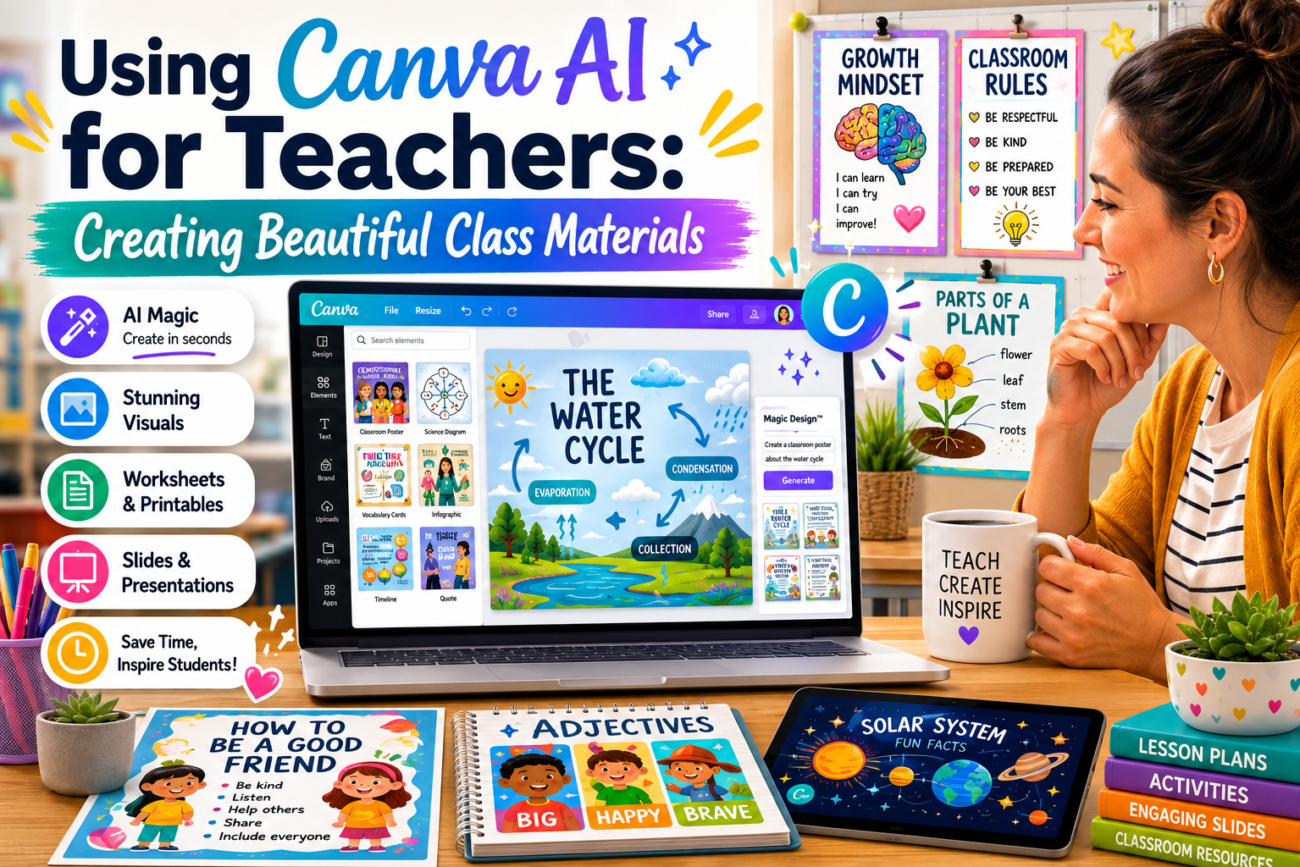
Canva AI has so many features that I didn’t initially tap into. For starters, it offers a “Magic Write” tool that helps you draft text. I tried it for a summary of the lesson, and it spit out something concise and informative. I was hooked. Then there’s the Resize Tool—perfect for turning one project into multiple formats, like posters for bulletin boards or social media posts for parent engagement.
What Works for Me
Here’s what I’ve learned about using Canva AI for teachers like you: start simple. Choose a theme that matches your subject. Use high-quality images and don’t be afraid to ask for AI suggestions. It’s there to make your life easier. Also, keep your audience in mind. Students need engaging and visually appealing materials, but they also need clarity. It’s a balancing act, but one that gets easier with practice.
Top Features for Teachers
Here are my go-to Canva AI features I recommend:
- Magic Write: Drafts your text quickly and organizes information.
- Templates: Pre-designed layouts save time and spark creativity.
- Stock Photos: Access to a library of images that make your materials pop.
- Animations: These can make your slides more dynamic!
- Collaboration Tools: Share with other teachers for feedback.
Common Questions Teachers Ask
Now, let’s tackle some questions I’ve received about Canva AI:
- Is Canva AI free for teachers? Yes! There is a free version that has plenty of features. Some advanced features require a subscription, but free is great for starters.
- Can I use Canva AI for student projects? Absolutely! It’s a fantastic tool for students to learn design skills.
- How long does it take to create materials? It depends on your comfort level. My initial designs took ages. Now, I can whip up something in about 20-30 minutes.
- What if I’m not good at design? Don’t worry! Canva AI makes it easy. Plus, you can choose from loads of templates that are visually appealing.
- Can I collaborate with other educators? Yes! Sharing designs and getting feedback is a breeze.
Reflecting on the Journey
As I sit here, reminiscing on my Canva journey, I feel a mix of relief and excitement. The AI took what was once a daunting task and turned it into something that brings joy to my teaching. Sure, I still have my days of frustration—don’t we all? But knowing I can create beautiful, engaging materials in a fraction of the time is liberating.
So, if you’re like me—sipping cold coffee in a chaotic classroom—give Canva AI a shot. You might just find that it’s the tool you’ve been missing all along. Who knows? You could be the next teacher captivating students with visually stunning materials. And if not, at least you’ll have a great design to hang on your wall. Happy designing!
