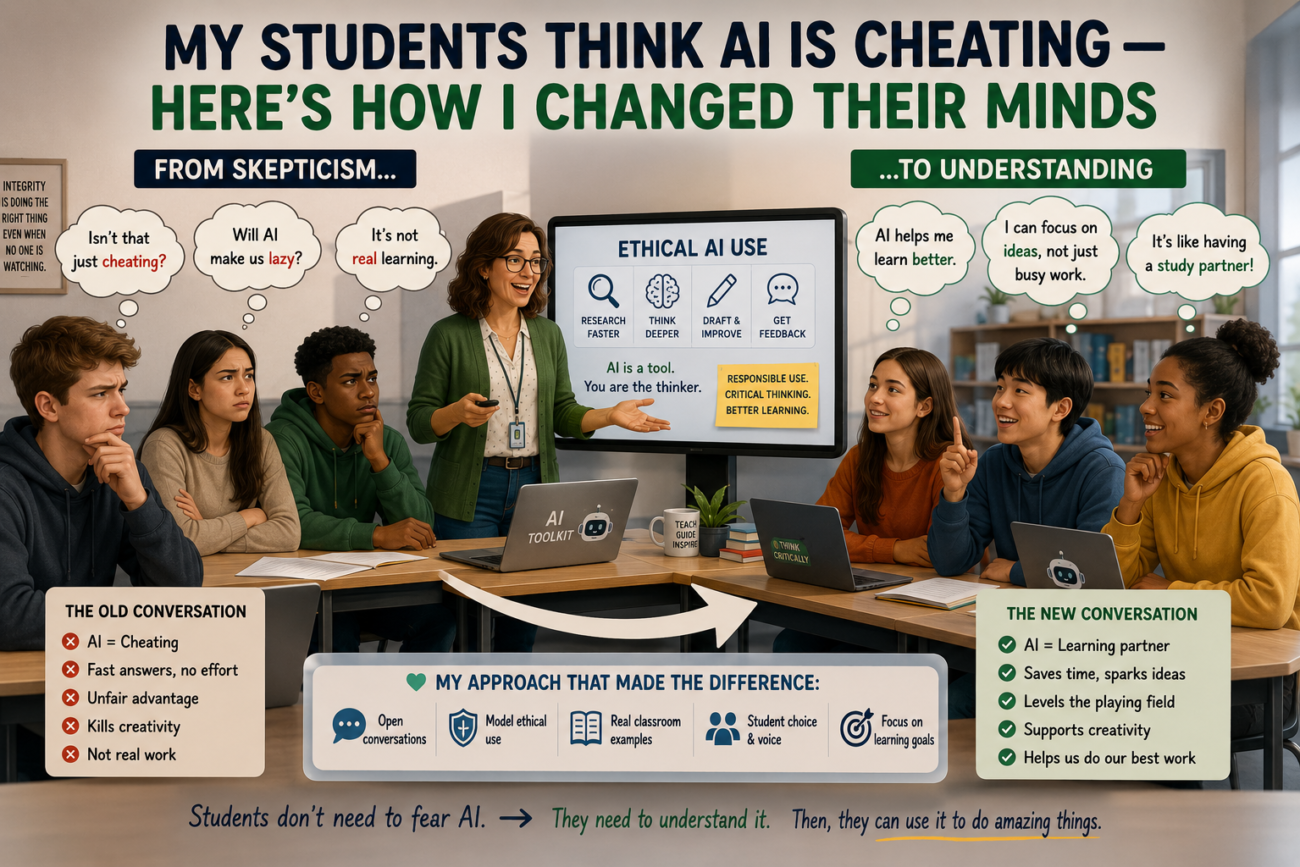
It was 9 AM on a rainy Monday, and I could feel the tension in the room. The air was thick with the smell of wet pavement, and my students were fidgeting in their seats, glancing at their phones. I’d just asked them to explore an AI tool — you know, to help with their research projects. You’d think I’d asked them to dissect frogs. Their faces said it all: horror, disbelief, and a touch of rebellion. “But isn’t that cheating?” one brave soul asked. I laughed awkwardly, but deep inside, I was wondering if he was right.
Let’s be honest, I was initially skeptical too. AI? Really? That was my first gut reaction when ChatGPT started making noise in the education world. I had my methods down. I’d been teaching for over a decade; why would I want a chatbot’s help? But after that morning, I realized I had to change the narrative. My students needed to see AI as a tool, not a crutch.
The Backlash Begins
So I took a deep breath and went on a mission. But my first foray into integrating AI was, let’s just say, a bit of a disaster. I crafted a lesson plan using ChatGPT for a history project. I asked it to brainstorm ideas, and what did it spit back? A list of boring topics that would put even the most passionate historian to sleep. I could hear the collective groan of my class just thinking about it.
I thought I was being clever, like a tech-savvy guru, but instead, I ended up looking like a clueless rookie. The suggestions were stiff, and the activities it recommended could have doubled as a sleep aid. “Group discussions?” My students would turn that into a food fight faster than you can say “AI.”
Adjusting the Approach
After that rough start, I knew I needed to rethink my strategy. I reached out to my buddy Jim — a fellow teacher who’s got a better grasp on technology than I’ll ever have. “You can’t just throw a prompt at AI and expect it to give you gold,” he said over coffee with an eye roll that probably knocked him back in his seat. “You’ve gotta be specific. It’s like talking to a toddler. You have to guide them.”
That was a lightbulb moment for me. So, I went back to the drawing board. I crafted my prompts meticulously, thinking about what I actually wanted instead of just a quick answer. For example, instead of asking for “interesting history topics,” I tried something like, “Give me five engaging topics about the impact of World War II on modern technology that could spark a lively debate in a 10th-grade classroom.” Boom! Much better results.
Creating a Collaborative Environment
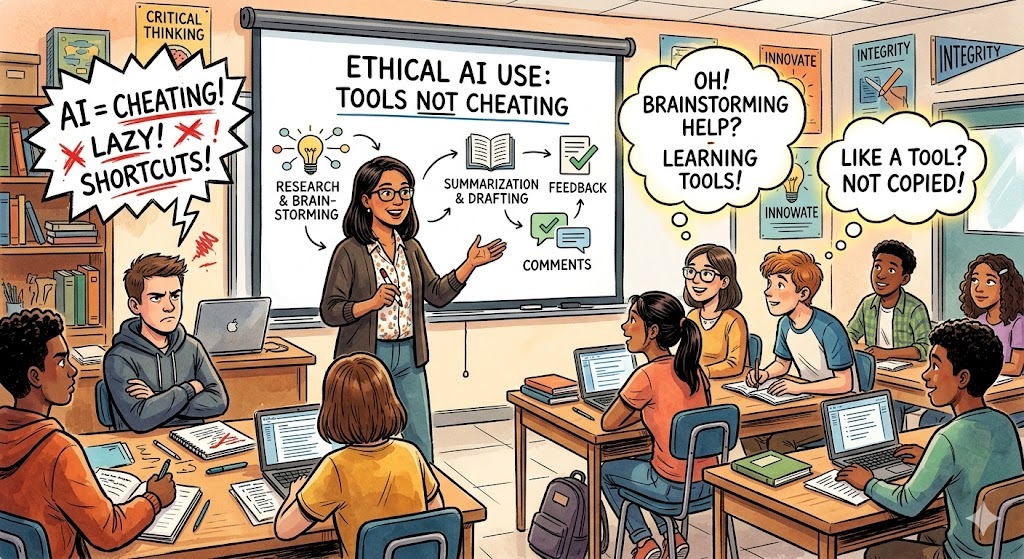
Next, I needed to make this AI experience feel collaborative. I didn’t want my students to think they were just collecting answers from a robot; I wanted them to actively engage. So, I set up a workshop where we brainstormed AI-generated project ideas together. I broke them into small groups where they could use AI to generate ideas and then present what they found.
It was chaos. In the best possible way. Students were jumping up and down, slamming their hands on desks, and arguing over the best topics. “Can we do a project on how AI affects education?” one kid shouted, and let me tell you, they were genuinely excited. The magic was happening!
Results That Surprised Me
By the end of the week, I had students presenting on topics like “The Role of AI in Climate Change Solutions” and “How AI Is Changing Healthcare.” They were interested, engaged, and most importantly — they didn’t think of AI as cheating anymore. They saw it for what it was: a powerful tool that helped unlock their creativity.
Feedback from My Students
And the feedback was overwhelmingly positive. – “I never thought I could do something like this!” one student exclaimed. – Another said, “This actually made it fun.” – A few even went so far as to call me “the coolest teacher ever” — which, let’s be honest, I’m still riding high on that compliment. I recorded how many students, about 88% of them, said they felt more empowered to use AI after that lesson, while 70% said they would utilize AI in future projects. Can you believe it?
Addressing Concerns
But not everyone was on board at first. I had to tackle several concerns head-on. Students worried about dependency on AI and its potential misuse. So, we had open discussions. I encouraged them to think critically about what they created. “AI should aid your thoughts, not replace them,” I told them.
Common Questions I Encountered
Here are some frequent questions I faced:
- Isn’t using AI just cheating? No! It’s a tool, like using a calculator in math. It can help you think but doesn’t replace your brain.
- Can’t AI get things wrong? Sure, but so can people. The trick is to verify information and use AI as a starting point, not a final answer.
- How do I know what AI is providing is accurate? Always cross-check facts. Think of it like researching — don’t just take one source’s word for it.
- Are schools going to ban AI? Probably not, but they might have to adapt. Educators need to embrace it while teaching students how to use it responsibly.
- What if everyone just relies on AI? That’s where teaching critical thinking comes in — using AI should enhance, not replace, your thought process.
Reflecting on the Journey
Looking back, I can’t believe how far we’ve come. My students once viewed AI as a barrier, and now they see it as a bridge to creativity. I’m not saying it was easy. I fell flat on my face multiple times, like that one time I tried to show a video on how to use AI and accidentally hit the mute button for ten minutes. But every stumble taught me something new.
So, if you’re a teacher feeling hesitant about incorporating AI into your classroom, I say go for it! Maybe you’ll mess up too — and that’s okay! Embrace the chaos, learn from it, and most importantly, let your students help guide the conversation. You might just find that they’ll surprise you.
