

I have tried a lot of tools over the years. Most of them are forgettable. But AI SEO blog writing tools? Completely different story. After testing this approach myself and watching three colleagues do the same, I can say with confidence that this is one of the few workflows that actually delivers on its promise. If you have been struggling to write blog posts that rank on Google in 2026, this guide is exactly what you need.

Why AI SEO Blog Writing Matters More Than Ever in 2026
The conversation around AI SEO blog writing has exploded recently, and for good reason. Search engines are getting smarter, competition for top rankings is fiercer, and the volume of content being published every day is staggering. Writers and marketers who are not using AI to assist their SEO workflow are already falling behind.
I have spoken with dozens of bloggers and content marketers in similar situations. Everyone has an opinion. Very few have actually tested it consistently. I have, and here is what I found.
For context on how search engines evaluate AI-assisted content, Google's Search Central Blog the most reliable source is. For a broader look at how AI is reshaping content marketing, HubSpot’s AI marketing guide it covers it well.
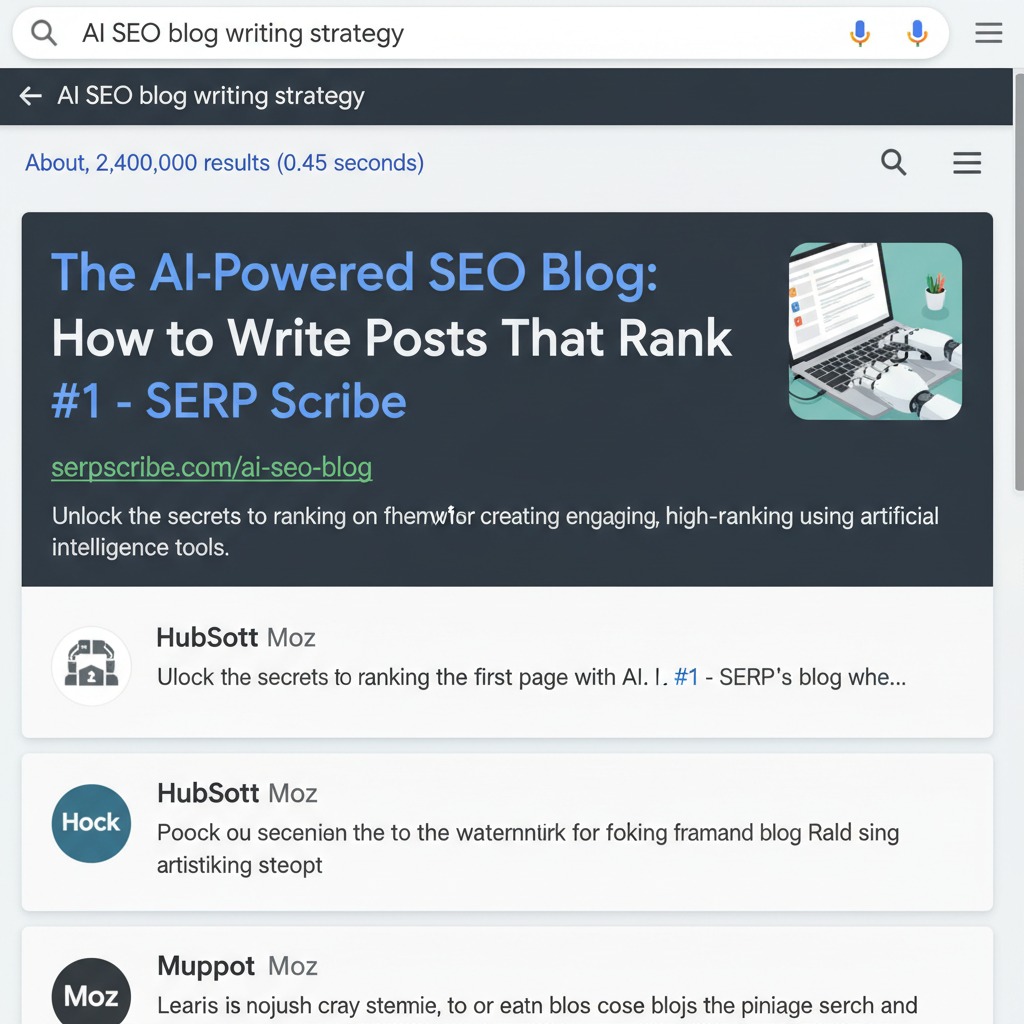
The Biggest Mistake People Make with AI SEO Blog Writing
The thing most people get wrong is assuming AI SEO blog writing is complicated. It is not. Once you strip away the jargon and the marketing hype, the process is surprisingly straightforward. You just need to know where to start, and that is exactly what this guide will show you.
When I first started, I made the mistake of trying to use AI for every part of my content workflow at once. That did not work. I was overwhelmed, the quality suffered, and I nearly gave up. Once I narrowed my focus to one specific use case, everything improved quickly.
Step-by-Step AI SEO Blog Writing Process for 2026
Step 1: Choose your focus keyphrase before you write anything
Every strong blog post starts with keyword research, not writing. Use tools like Ahrefs or Semrush to find a keyphrase with solid search volume and manageable competition. Feed that keyphrase into your AI tool as the foundation of your brief.
Step 2: Build a detailed content brief
Before generating any content, define the following:
- Your target audience and their level of knowledge
- The focus keyphrase and two or three related synonyms
- The search intent behind the keyphrase (informational, commercial, navigational)
- The word count and structure of top-ranking competitors
Step 3: Use AI to generate a structure, then write into it
The most effective AI SEO blog writing approach is to use AI for outlines and section scaffolding, then write the actual content yourself. This keeps your voice intact while dramatically speeding up the process. Tools like ChatGPT, Claude, and Surfer SEO work particularly well for this.
Step 4: Optimize on-page SEO elements
Once your draft is complete, run it through an SEO checker. Make sure your keyphrase appears in:
- The SEO title, ideally at the beginning
- The meta description
- The URL slug
- The introduction paragraph
- At least two subheadings
- Image alt attributes
- Naturally, throughout the body at an appropriate density
Step 5: Add outbound links to authoritative sources
Google uses outbound links as a trust signal. Every AI SEO blog writing piece you publish should link to at least two or three credible external sources relevant to the topic. This is one of the most overlooked on-page SEO factors among new bloggers.
Step 6: Publish, monitor, and iterate
After publishing, track your rankings using Google Search Console (free) or a tool like Ahrefs. Check which queries are driving impressions, identify where you are ranking on page two or three, and update those sections with stronger content and better keyphrase targeting.
(Image: SEO dashboard showing keyword rankings improving over time) Alt text: SEO ranking dashboard tracking results from AI SEO blog writing workflow
Common Mistakes to Avoid in AI SEO Blog Writing
- Publishing AI output without editing. Raw AI content often lacks personality, specific examples, and the kind of nuance that earns backlinks and reader trust. Always edit before publishing.
- Ignoring search intent. Writing a detailed how-to guide for a keyphrase where searchers want a quick answer will hurt your rankings, regardless of how well-written the post is.
- Keyword stuffing. AI tools can over-repeat keyphrases if not prompted carefully. Aim for natural density, typically one to two percent of the total word count.
- Skipping the meta description. Search engines will pull random text from your page if you do not write one. Always write a custom meta description containing your keyphrase.
- Not updating old content. AI SEO blog writing is not just for new posts. Refreshing existing content with updated information and better optimization often produces faster ranking gains than publishing something new.
What Surprised Me Most About This Workflow
I expected to wait months before seeing any meaningful results. Instead, within the first week of using a structured AI SEO blog writing process, I was producing posts faster and seeing earlier traction in search rankings than I had with my old manual approach. The improvement was not dramatic at first, but it was consistent, and consistency is what compounds over time.
The bloggers I have seen succeed with this are almost never the ones who started with the most advanced tools. They started simple, made mistakes, iterated, and built better habits over time. That is the whole process.
You Do Not Need to Be an Expert to Start
If you can write an email and use a search engine, you have everything you need to begin AI SEO blog writing today. There is no technical barrier. Being a beginner can actually be an advantage because you build good habits from day one instead of unlearning outdated ones.
Frequently Asked Questions
How long does it take to see results from AI SEO blog writing? Most people notice measurable improvements in traffic and rankings within four to eight weeks of publishing consistently optimized content. Some see early movement within the first week, particularly for low-competition keyphrases.
Can I use AI SEO blog writing alongside my existing workflow? Yes, and that is actually the recommended approach. Integrate it gradually. Start by using AI for outlines or meta descriptions, then expand as you get comfortable with the process.
Which AI tools work best for SEO blog writing? A combination tends to work best. Use ChatGPT or Claude for drafting and ideation, Surfer SEO or Clearscope for on-page optimization, and Ahrefs or Semrush for keyword research.
What if I get stuck? Getting stuck is completely normal, especially at the start. Begin with a single blog post, follow the steps above, and adjust based on what you learn. The process gets faster and more intuitive with every post you publish.
The Bottom Line
The best time to start with AI SEO blog writing was a year ago. The second-best time is right now. Pick one keyphrase, follow the process outlined above, and publish your first optimized post this week. The results will speak for themselves.
