It was a rainy Wednesday afternoon. I sat at my cluttered desk, a towering stack of student essays staring me down like a bunch of hostile little mountains. The smell of burnt coffee wafted through my classroom, mingling with the faint scent of highlighters and old textbooks. I had just graded my fifth essay on the symbolism in “The Great Gatsby”, and I had to remind myself that these kids were trying. I could feel the weight of exhaustion pulling at my eyelids. Grading papers was supposed to take an hour, but here I was three hours in with no end in sight. I thought, there has to be a better way.
But let me tell you, the idea of using AI to help with this was foreign to me. I was the person who rolled my eyes at tech trends. The thought of AI tools felt daunting. But then I heard about some colleagues using a writing assistant called Grammarly — and they seemed to be thriving. So I took a leap of faith. Kind of like when you decide to try a new dish at your favorite restaurant, only to discover it’s the best thing you’ve ever tasted.
My First Encounter with AI
So, I ventured into the world of AI with my first tool: Google’s AI writing assistant. I thought it was going to be a game-changer. I plugged in a student essay and waited for the magic to happen. And what happened? Well, it was like inviting a cat to a dog show. It just didn’t fit my needs.
The feedback was generic. “Consider adding more detail,” it suggested, as if my student didn’t already pour their heart out about Gatsby’s green light. I was frustrated. This was not a helpful tool, just another way to feel inadequate about my grading.
Adjusting My Approach
Realizing I was missing something, I decided to give AI another shot. This time, I went for ChatGPT. I figured if it could generate text and ideas, it might help me with grading as well. Sure, it was a little intimidating at first. I felt like I was trying to teach a toddler how to ride a bike. But after a few shaky attempts, I realized I just needed to be a little more specific.
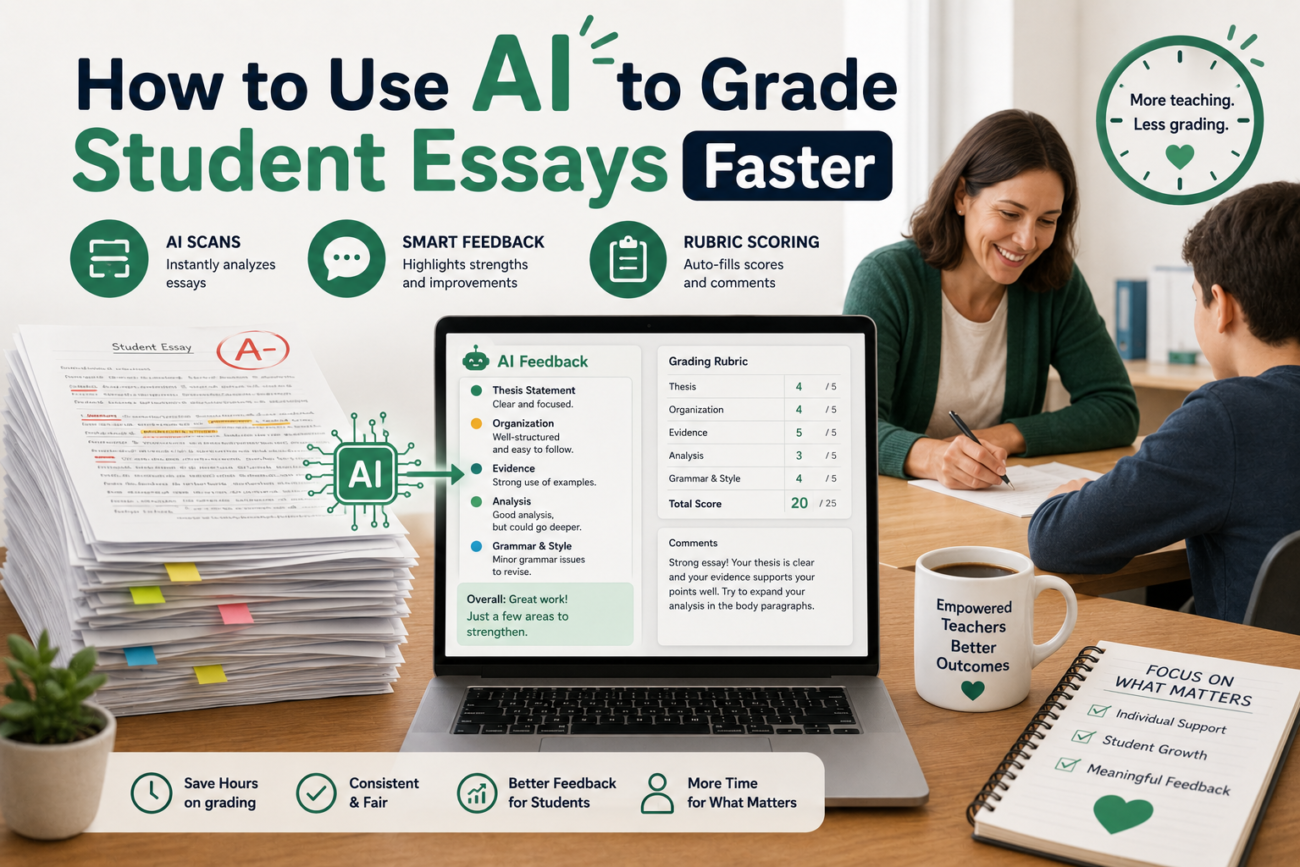
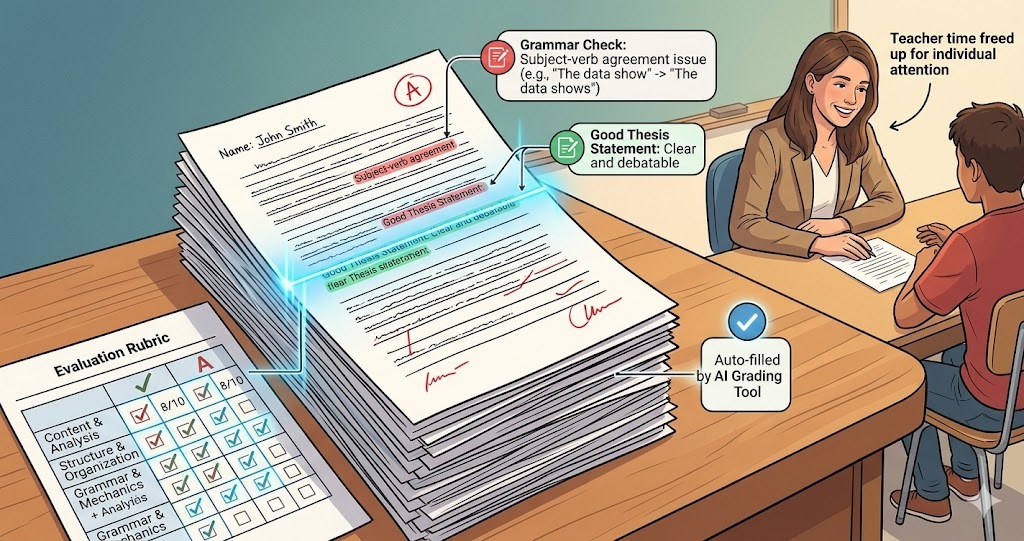
Instead of dumping the entire essay into the chat and expecting a miracle, I started asking pointed questions. “What are the strengths of this argument?” or “What could be improved in the thesis statement?” It felt like turning the light on in a dark room — suddenly, I could see the potential.
Finding the Sweet Spot
Once I figured out how to ask better questions, the feedback became much more usable. Index cards were flying everywhere. I had a system: I would enter the essay, receive feedback, and then critique the AI’s critique. Teamwork makes the dream work, right?
After a while, I could grade a set of 30 essays in about 2 hours instead of 5. That’s a 60% reduction in time. Who knew a bot could save my sanity? The comments were clearer, the suggestions more actionable, and I didn’t feel like I was drowning in red ink.
Letting AI Do the Heavy Lifting
Now, here’s the thing: I wouldn’t let AI do all the grading. That’s a recipe for disaster. You still need to bring your teacher magic into the mix. But using AI to take some of the load off made a world of difference.
For example, I started to notice patterns in my students’ writing. With AI pulling out common mistakes, I could spend time planning mini-lessons that targeted specific issues. You know, instead of just shouting “Punctuation matters!” into the void.
My New Lesson Plans
And let me tell you about my lesson planning. I’m organizing targeted workshops based on the AI feedback. For instance, if ChatGPT flagged a bunch of essays for vague thesis statements, I’d whip up a fun session where we brainstorm thesis statements together. You might even say I’ve become a bit of a teaching wizard. I mean, who doesn’t want to be the Hermione Granger of their classroom?
Success Stories
Last semester, I tried my new approach with a class of 25 students. When I first started, only 40% of students were meeting the standards for essay writing. After implementing AI feedback and my tailored lessons, more than 75% made improvements. That’s a win if I’ve ever seen one!
What Went Wrong
Of course, it hasn’t been all sunshine and rainbows. I made mistakes along the way. For one, I once let the AI generate overly complex jargon in an essay rubric, and a student thought “convoluted language” was a compliment. Sure, it’s great to stretch our vocabulary, but not when we end up sounding like a dictionary exploded.
What I’ve Learned
One crucial lesson? Adaptability is key. You can’t stick to the same old methods and expect results. Just like I learned to embrace AI, you can too. It’s about working smarter, not harder — and heck, isn’t that what we all want?
FAQ
1. Can AI really help grade essays?
Absolutely, but it’s not perfect. It’s like having a super helpful assistant, but you’re still the boss!
2. Do I have to let AI do all my grading?
Nope! Use it as a tool to assist you, not replace you. Your insights as a teacher are irreplaceable.
3. What if I’m not tech-savvy?
No worries! If I can figure it out, you can too. Start small and play around with different tools.
4. Is it really faster?
Yes! I cut my grading time by 60% just by using AI to get started.
5. Will my students benefit from it?
Definitely! More targeted feedback will help them improve their writing skills significantly.
So there you have it. My journey from drowning in essays to having a streamlined grading process with the help of AI. It’s not about replacing the magic of teaching; it’s about enhancing it. I’m still learning, and I suspect I always will be. But that’s what keeps this gig interesting, right?
