It was 3 PM on a Tuesday. I stood outside my classroom, the fluorescent lights buzzing above me, a cacophony of laughter and chatter spilling from the halls. My students were piling up in the doorway, their eyes glazed, desperate for something—anything—to catch their attention. I felt that familiar knot in my stomach. Today was supposed to be the day I introduced AI tools to my class, but all I had was a jumble of ideas and a half-finished presentation. How was I going to make them care about AI?
I mean, really. AI? To a bunch of 12-year-olds? But then I remembered the look on Sarah’s face last week when she enthusiastically raved about how her students created their own stories using AI. It was like she had just discovered fire. Could I do the same? I had to try.
Idea #1: AI Storytelling
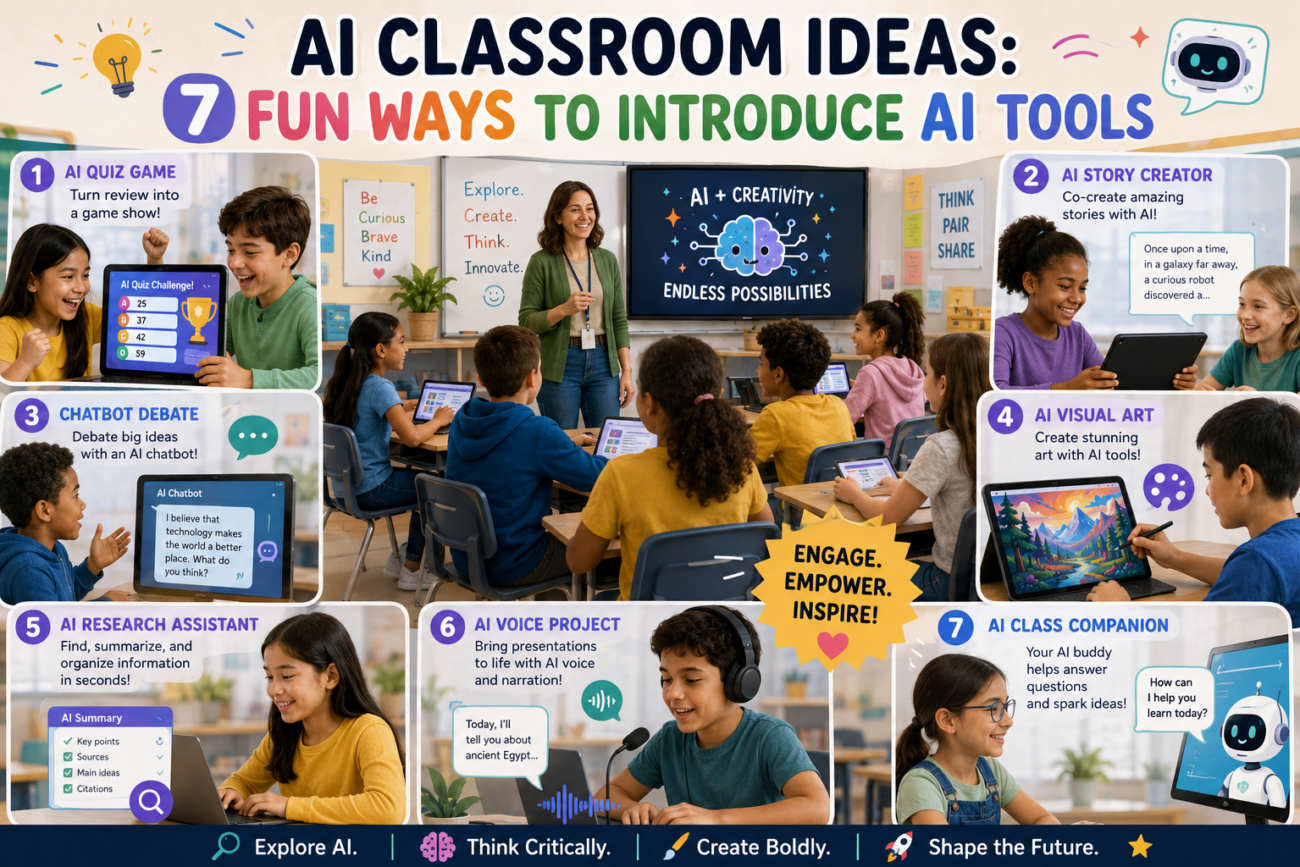
I kicked off my first AI lesson with storytelling. I paired the kids up and introduced them to ChatGPT. “You can create your own stories, but here’s the catch,” I said, “You have to prompt the AI with an unusual first sentence.” They groaned, but curiosity sparked. One group wrote, “Once upon a time, a potato had dreams of becoming a spaceship.” The absurdity made them giggle, and soon, the AI was cranking out wild tales that had them hooked. Talk about motivation! Some of these kids who usually rushed through assignments were suddenly invested, arguing over plot twists and character arcs.
Idea #2: Myth-Busting AI
Next, I wanted my students to dissect the myths surrounding AI. We broke into small groups and each selected a common misconception, like “AI robots will take over the world.” Yikes! They researched using the AI to find counterarguments and then presented them. I’ll never forget the look on Marcus’s face when he found out AI can’t even understand sarcasm. “So, it’s like my uncle?” he exclaimed. I couldn’t help but laugh. The discussions that ensued were lively, and I saw kids who typically don’t speak up finally shine.
Idea #3: AI Art Creation
Art was my next venture. I introduced them to an AI art generator. The excitement was palpable. “You can make anything! Even a cat playing chess!” I promised. The kids spent the next hour inputting their wild ideas, and I watched as they shared their artwork with each other. It felt like I was hosting an art gallery opening. Okay, maybe a slightly chaotic one with paint flying everywhere, but a gallery nonetheless.
Idea #4: AI Debate Club
It was time to bring in some structured chaos: a debate club! We divided into teams and had each group pick a topic where AI could either help or harm. I’ll admit, the first few minutes were just a lot of shouting. But then, they started using the AI as a resource to back up their arguments, which led to surprisingly insightful conversations. Classic example: Mia argued that AI in healthcare could lead to better patient outcomes, while Max countered it might replace doctors. Both sides had valid points. I just stood back, beaming with pride.
Idea #5: AI Scavenger Hunt
Thinking outside the box can be hard! So I created an AI scavenger hunt where they had to find answers to fun questions using AI tools. “What’s the name of a dinosaur that could play a guitar?” they had to ask. Weird? Yes. Unforgettable? Absolutely. The laughter that echoed through the halls as they raced around the school was music to my ears. The noise wasn’t just silly; it was collaboration and exploration in real time.
Idea #6: Show and Tell with AI
Sometimes kids just need a platform to show off. I set a “Show and Tell” day where they could either display something they made or share something cool they discovered using AI tools. The creativity was insane. One kid wrote a rap using AI, complete with a dance routine. I mean, who doesn’t love a good AI-generated rap? This was their moment to shine, and shine they did. It was the highlight of my week.
Idea #7: AI for Everyday Tasks
Finally, I wanted them to see how AI could help in real life. So, we brainstormed everyday tasks, from homework help to recipe planning. We used ChatGPT to create a grocery list based on a recipe they selected. This one blew their minds. “Wait, it can help me cook?” One student exclaimed. They realized, amid the laughter, that AI could be a useful tool for their real-world struggles.
Things I Learned the Hard Way
Listen, I’m not saying these lessons were smooth sailing. There were tech hiccups. I had questions like, “Why can’t I get my AI to draw a pickle?” And trust me, I’ve seen enough blank stares to know when I’ve lost an audience. It took time to find the balance between hands-on learning and tech integration, but the energy in the classroom was worth every misplaced click.
FAQ
Q: What if my kids don’t care about AI?
A: Trust me, just find a way to make it funny or relatable. They perk up when it seems like fun.
Q: How do I explain AI without overwhelming them?
A: Use simple language and examples. They’ll understand better rather than getting caught up in jargon.
Q: Isn’t it too advanced for their age?
A: Not at all! Kids are tech-savvy. They’ll surprise you.
Q: What if they misuse AI tools?
A: Like with any tool, supervision is key. Teach them responsible use upfront.
Q: How do I fit this into my existing curriculum?
A: Start small! You can complement existing lessons with AI-related activities.
Final Thoughts
So, there you have it! Seven ideas that turned my classroom from drab to fab in a matter of a few weeks. I’ll be honest, I was terrified at first. But seeing my students engage with AI, use their creativity, and even tackle complex topics filled me with hope for our future. It’s not just about teaching them about AI; it’s about showing them that learning can be fun, exciting, and bursting with possibilities. And if a potato can dream of becoming a spaceship, maybe we all can.
